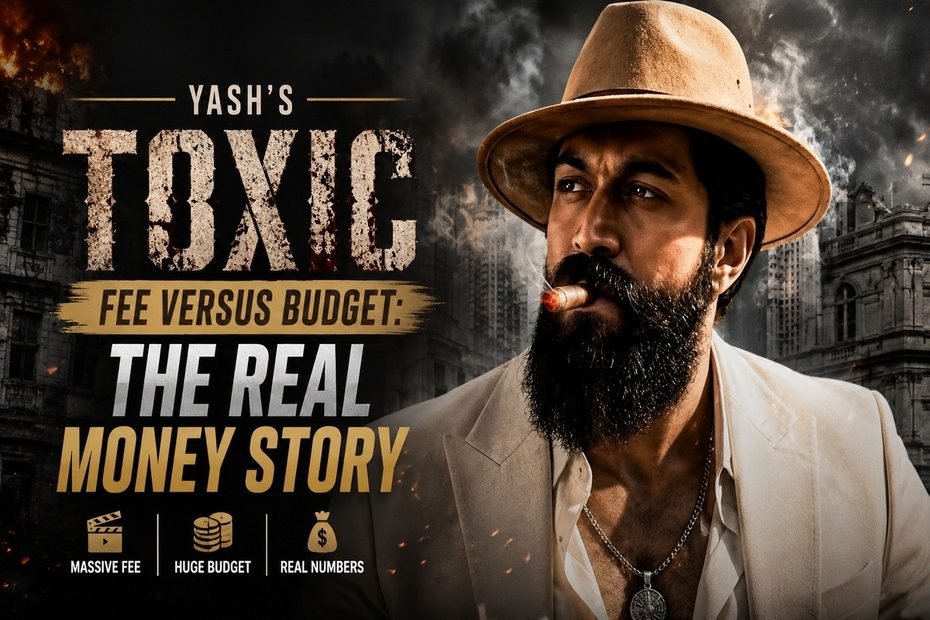
Yash is heading back to the big screen this week with Toxic: A Fairy Tale for Grown-Ups, and the money conversation around the film has quietly shifted from his fee to something bigger.
Trade sources indicate Yash is being paid a flat fee of around ₹50 crore for playing the dual lead role of Raya. On its own, that number sounds massive. Placed next to the film’s own budget, reportedly ranging between ₹600 crore and ₹800 crore, it works out to roughly 6 to 8 percent of the total cost.
That gap is not an accident. Reportedly, Yash’s arrangement includes a profit-sharing clause tied to his production banner, Monster Mind Creations, which has co-produced the film alongside KVN Productions. This hybrid structure, a modest upfront fee combined with backend ownership, is increasingly how major stars are choosing to get paid, and it keeps a film’s official budget from looking distorted by a single actor’s cheque.
The advance booking signal
The early numbers suggest the bet is paying off before the film has even opened. As per the latest trade reports, Toxic’s advance bookings crossed ₹18 crore within 48 hours of going live, with roughly 4.75 lakh tickets sold on the first day of pre-sales alone.
Industry trackers note that in the first 24 hours, Toxic outsold the opening pre-sales of Ranbir Kapoor’s Animal, which had moved around 52,000 to 55,000 tickets in the same window. It also moved faster than Jawan at a comparable stage. The film still trails Dhurandhar 2, which remains the biggest advance seller of 2026 so far.
Why the fee-to-budget math matters
For a film of this size, a flat fee anywhere close to matching the budget would have made the numbers look implausible. By keeping Yash’s upfront pay modest and shifting his real earning potential to the box office and streaming performance, the makers have kept the ₹600–800 crore budget structurally realistic.
If Toxic opens strongly and sustains through its extended holiday window, Yash’s actual take home from the film, once profit share is factored in, could end up several times higher than his reported ₹50 crore fee. That would mark a shift in how his earning power is measured, from a per-film actor’s cheque to ownership economics, the same model that has driven wealth growth for stars who move from performer to producer.